https://endurtech.com/wp-content/uploads/2024/06/how-to-block-facebook-crawler.jpg512512Mannyhttps://endurtech.com/wp-content/uploads/2018/04/endurtech-logo.pngManny2026-10-13 08:50:222026-10-13 09:02:21List of Spider Crawlers to Block
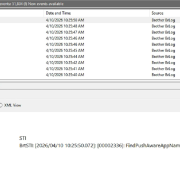
The most effective resolution for the “STI BrtSTI FindPushAwareAppName:: Invalid Arg” error is to delete the BrUtilities and PushScanApp registry folders located under HKEY_LOCAL_MACHINE\SOFTWARE\Brother
Simply uninstalling and reinstalling the Brother software suite often does not clear this issue because of the lingering registry keys which continue to trigger the error loop.
This article will guide you through the process that I used to prevent the BrLog error from triggering every single second on my Windows 11 PC.
You finally installed your SSL certificate, but your browser is still stubbornly shouting “Not Secure” in the address bar.
You try pulling the site up on your phone or a different browser, and it looks perfectly fine. Beautiful green padlock, completely secure. So why is your main browser gaslighting you?
If this sounds familiar, the issue usually boils down to a single moment: you accessed the site before the SSL was set up and bypassed the browser warning.
When you click “Advanced” and proceed to an insecure site, your browser creates a persistent security exception. Even after you install a pristine SSL certificate, the browser often refuses to re-verify the site, clinging instead to its cached memory of that initial insecure connection. If you are stuck in this loop, a standard page refresh won’t fix it. Here is how to break the cycle by clearing your browser’s HSTS and SSL cache.
https://endurtech.com/wp-content/uploads/2021/03/brave-browser-logo.jpg512512Mannyhttps://endurtech.com/wp-content/uploads/2018/04/endurtech-logo.pngManny2026-07-20 12:48:422026-07-20 12:51:04How to Fix the “Not Secure” Address Bar Error
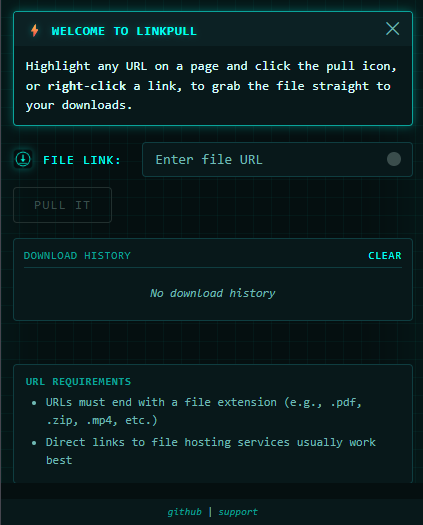
I built LinkPull because downloading a file shouldn’t require multiple steps, three tabs, and a prayer that the “Download” button isn’t actually an Ad. If you’ve ever right-clicked a link, chosen “Save As,” and watched your browser fail to save the file with the right extension — or worse, opened a new tab just to paste a URL into some sketchy downloader site — LinkPull is for you.
It’s a small, fast Brave / Chrome browser extension with one job: take a direct file link and pull it down to your computer. That’s it. No accounts, no Ads or upsells, no bloat, and the code is publicly published on GitHub for review. Like this free extension? Buy me a cup of coffee.
https://endurtech.com/wp-content/uploads/2026/07/LinkPull-Extension-by-Endurtech.png512512Mannyhttps://endurtech.com/wp-content/uploads/2018/04/endurtech-logo.pngManny2026-07-07 19:35:302026-07-07 20:38:57LinkPull Extension, Grab Any File From a URL
If you use a password to sign into your Windows 11 personal computer (PC) you can adjust a setting which will allow you to automatically sign in, bypassing the password input requirement.
This is handy if you need to have an account password set (for example, network sharing) but don’t want to manually insert a password upon starting or rebooting your PC.
Follow the steps within this article only if you’ve physically secured your Windows 11 PC and you’re the only person using your computer.
https://endurtech.com/wp-content/uploads/2018/04/windows.jpg512512Mannyhttps://endurtech.com/wp-content/uploads/2018/04/endurtech-logo.pngManny2026-07-03 11:10:342026-07-03 14:13:37How to Automatically Sign into Windows 11
Microsoft does not provide a way to bypass Smart App Control for individual applications; the security feature is designed with a strict enforcement model that prevents end-user overrides for specific files or programs.
However, you can turn the Smart App Control feature off.
In order to run blocked software or files, you must turn off Smart App Control entirely.
This article will show you how to do so whether you want this change permanent or just temporary.
https://endurtech.com/wp-content/uploads/2018/04/windows.jpg512512Mannyhttps://endurtech.com/wp-content/uploads/2018/04/endurtech-logo.pngManny2026-06-18 10:13:432026-06-18 10:14:38Disable Windows Smart App Control
Are your client email Restore requests are being sent to your spam folder? Chances are their domain DNS SPF record needs to be updated.
Because Avanan inserts itself into the outbound mail flow to handle these requests, those Restore request emails originate from Avanan’s cloud IPs instead of your client’s primary mail server (like Microsoft 365 or Google Workspace).
If the client’s DNS doesn’t explicitly authorize Avanan, receiving servers will flag it as an SPF failure, thus sending the Restore request email to spam.
https://endurtech.com/wp-content/uploads/2018/04/windows.jpg512512Mannyhttps://endurtech.com/wp-content/uploads/2018/04/endurtech-logo.pngManny2026-06-17 15:43:492026-06-18 10:15:27Allow Avanan to Email from Client Domain
If you are an IT administrator managing Microsoft 365, you’ve likely run into this headache: an important external vendor, client, or partner is trying to reach your team, but their emails keep getting swallowed by the spam filter.
Because they aren’t part of your organization’s domain, you need a safe, reliable way to tell Exchange, “Hey, this specific person is safe. Let them through.”
While users can manage their own safe senders in Outlook, the most robust way to handle this as an admin is by creating an Anti-Spam Bypass Rule via Exchange Mail Flow.
Here is the exact step-by-step process to add an external email address to your tenant-wide allow list using the Exchange Admin Center (EAC).
https://endurtech.com/wp-content/uploads/2018/04/windows.jpg512512Mannyhttps://endurtech.com/wp-content/uploads/2018/04/endurtech-logo.pngManny2026-06-02 13:02:422026-06-02 13:02:42Whitelist External Email in Microsoft Exchange (Tenant-Wide)
A bloated operating system is a slow operating system, and one of the most overlooked culprits of digital clutter is your font library.
Every installed font consumes system resources, bloats your registry, and can actively slow down font-heavy applications like Adobe Creative Cloud, Microsoft Office, or your favorite IDE.
If you are trying to maintain a lean, high-performance PC, keeping a tight rein on miscellaneous font installations is a must.
Today, many apps and installers skip the traditional system-wide directory entirely, opting to quietly drop fonts strictly into your local user profile instead. If you are trying to track down recent additions to purge the clutter, the classic Control Panel won’t show you the full picture.
If your goal is a clean, optimized machine, this article covers how to uncover these hidden, user-specific fonts and sort them by installation date so you can easily sweep away what you don’t need.
https://endurtech.com/wp-content/uploads/2018/04/windows.jpg512512Mannyhttps://endurtech.com/wp-content/uploads/2018/04/endurtech-logo.pngManny2026-05-27 17:16:592026-06-02 13:04:13How to Find & Remove User Installed Fonts on Windows
It is one of the most frustrating puzzles in modern desktop computing: you calculate the exact size of your personal documents, photos, and project directories, only to discover that your physical storage drive is reporting hundreds of gigabytes of mysterious, unaccounted-for data.
You have already emptied the Recycle Bin, cleared out the standard temporary files, and uninstalled resource-heavy applications—yet your storage pool remains stubbornly maxed out.
Where in the world is this ghost data hiding?
When your personal files take up a modest 150 GB, but your Operating System claims 461 GB is occupied, you are dealing with a 311 GB “phantom gap.”
On a single-user Windows machine, this discrepancy isn’t random layout fragmentation. It is almost always driven by hidden OS features, background update caches, bloated system state images, or background software logs that Windows intentionally isolates from standard user view.
Let’s pull back the curtain and look at the prime locations where Windows hides its massive storage reservoirs, along with safe, step-by-step instructions on how to reclaim your drive space.
https://endurtech.com/wp-content/uploads/2018/04/windows.jpg512512Mannyhttps://endurtech.com/wp-content/uploads/2018/04/endurtech-logo.pngManny2026-05-21 08:35:542026-06-02 13:04:19Where Did My Hard Drive Space Go? Hunting Down Hidden Bloat