https://endurtech.com/wp-content/uploads/2024/06/how-to-block-facebook-crawler.jpg512512Mannyhttps://endurtech.com/wp-content/uploads/2018/04/endurtech-logo.pngManny2026-10-13 08:50:222026-10-13 09:02:21List of Spider Crawlers to Block
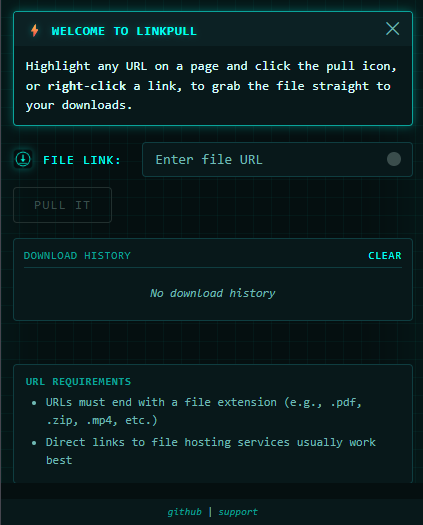
I built LinkPull because downloading a file shouldn’t require multiple steps, three tabs, and a prayer that the “Download” button isn’t actually an Ad. If you’ve ever right-clicked a link, chosen “Save As,” and watched your browser fail to save the file with the right extension — or worse, opened a new tab just to paste a URL into some sketchy downloader site — LinkPull is for you.
It’s a small, fast Brave / Chrome browser extension with one job: take a direct file link and pull it down to your computer. That’s it. No accounts, no Ads or upsells, no bloat, and the code is publicly published on GitHub for review. Like this free extension? Buy me a cup of coffee.
https://endurtech.com/wp-content/uploads/2026/07/LinkPull-Extension-by-Endurtech.png512512Mannyhttps://endurtech.com/wp-content/uploads/2018/04/endurtech-logo.pngManny2026-07-07 19:35:302026-07-07 20:38:57LinkPull Extension, Grab Any File From a URL
Organizing your website’s URL structure is crucial for both user experience and SEO. A common challenge for WordPress users, especially those using robust themes like Avada, is separating different content types.
By default, setting a global permalink structure like /blog/%postname%/ often forces all content—including FAQs and Portfolio items—into that same directory.
This guide walks you through the exact steps to configure your WordPress website so that your blog posts, FAQs, and portfolio items each have their own distinct, clean URL structures.
https://endurtech.com/wp-content/uploads/2018/04/wordpress-content-management-system.jpg512512Mannyhttps://endurtech.com/wp-content/uploads/2018/04/endurtech-logo.pngManny2026-06-19 12:54:412026-06-19 13:14:31How to Separate Blog, FAQ, & Portfolio URLs on Avada WordPress Theme
Moving your WordPress blog posts to a subdirectory like /blog/ is a strategic move to separate your dynamic content from static pages, improving site structure and user experience.
This article will explain to you how to achieve putting all your blog articles under a different directory.
https://endurtech.com/wp-content/uploads/2018/04/wordpress-content-management-system.jpg512512Mannyhttps://endurtech.com/wp-content/uploads/2018/04/endurtech-logo.pngManny2026-06-19 12:09:452026-06-19 12:53:32How to Change Your WordPress Blog Post Directory
This article serves as a reminder-to-self regarding a recent display issue I had on one of my WordPress sites with the Avada child theme.
Within the Avada theme for WordPress you can set the padding to be a negative number so that two columns or containers overlap. This generates a nice effect.
However, after updating Avada to 7.15.3 I discovered a new option under the Performance menu (see screenshot) called: Optimize Offscreen Rendering
Turning the Optimize Offscreen Rendering on prevented the overlay from appearing despite my having adjusted the Z Index options.
No doubt they’ll have it fixed in an upcoming release, for now I’ll just leave it turned off.
If your WordPress site suddenly starts dragging, your database balloons in size, or your host sends you a warning about excessive queries, there’s a good chance the culprit is hiding in plain sight: Action Scheduler.
This background task runner powers WooCommerce, subscription plugins, backups, and countless other tools. When it behaves, it’s invisible. When it breaks, it can hammer your database every few seconds and generate gigabytes of log entries before you even know what happened.
That’s exactly what happened to one of my sites — and here’s how I fixed it.
It is one of the most frustrating puzzles in modern desktop computing: you calculate the exact size of your personal documents, photos, and project directories, only to discover that your physical storage drive is reporting hundreds of gigabytes of mysterious, unaccounted-for data.
You have already emptied the Recycle Bin, cleared out the standard temporary files, and uninstalled resource-heavy applications—yet your storage pool remains stubbornly maxed out.
Where in the world is this ghost data hiding?
When your personal files take up a modest 150 GB, but your Operating System claims 461 GB is occupied, you are dealing with a 311 GB “phantom gap.”
On a single-user Windows machine, this discrepancy isn’t random layout fragmentation. It is almost always driven by hidden OS features, background update caches, bloated system state images, or background software logs that Windows intentionally isolates from standard user view.
Let’s pull back the curtain and look at the prime locations where Windows hides its massive storage reservoirs, along with safe, step-by-step instructions on how to reclaim your drive space.
https://endurtech.com/wp-content/uploads/2018/04/windows.jpg512512Mannyhttps://endurtech.com/wp-content/uploads/2018/04/endurtech-logo.pngManny2026-05-21 08:35:542026-06-02 13:04:19Where Did My Hard Drive Space Go? Hunting Down Hidden Bloat
In some cases you may want a slightly more personal login page. Here is a snippet you can use to change the default WordPress login logo, link, and title.
https://endurtech.com/wp-content/uploads/2018/04/wordpress-content-management-system.jpg512512Mannyhttps://endurtech.com/wp-content/uploads/2018/04/endurtech-logo.pngManny2026-05-08 13:20:432026-06-02 13:04:20Replace WordPress login logo, link, and title
I’ve never used or want to use the Microsoft Phone Link app. Despite this fact, the application still runs in the background taking up between 40 to 50MB of RAM.
To remove Phone Link, which does not offer a standard uninstall option in Windows Settings, you must use PowerShell with administrative privileges.
In this article I provide you with that PowerShell snippet.
https://endurtech.com/wp-content/uploads/2018/04/windows.jpg512512Mannyhttps://endurtech.com/wp-content/uploads/2018/04/endurtech-logo.pngManny2026-05-07 10:10:292026-06-02 13:04:22How to Disable Microsoft Phone Link from Running in Background
There was a minor update ( I am talking 2.10.0 to 2.10.1 ) for Gravity Forms which included a ‘security enhancement‘ which I implemented.
Upon doing so my WordPress based membership site, which was using the Gravity Forms User Registration Add-On completely crashed with a Fatal Error and Your Site is Experiencing a Technical Issue notice.
No big deal I thought, I would just restore the backup from the day prior. Same result, so I continued restoring older daily backups without success. Now what!?
This article covers how I was able to resolve that Fatal Error but is intended for my personal use only in order to help me jog my memory should this issue occur in the future. So I won’t be going into great detail.
https://endurtech.com/wp-content/uploads/2018/04/gravityforms.jpg512512Mannyhttps://endurtech.com/wp-content/uploads/2018/04/endurtech-logo.pngManny2026-05-01 09:21:572026-06-02 13:04:23WordPress Fatal Error Gravity Forms with User Registration Add-On